If someone asked you when night starts you would probably say when the sun goes down. Reasonable. The FAA disagrees. Their definition of civil twilight is what actually matters here and it catches a lot of people off guard on the exam.
How the FAA Defines Night
Under Part 107, night is defined as the time between the end of evening civil twilight and the beginning of morning civil twilight. Civil twilight ends 30 minutes after sunset and begins 30 minutes before sunrise.
So in plain terms, you have a 30-minute window after the sun sets where it is still not technically night by FAA standards. And 30 minutes before sunrise the FAA already considers it daytime. That window matters because the lighting rules and requirements kick in based on this definition, not based on when the sun actually disappears.
What Changed With the 2021 Rule Update
Before 2021 you needed a waiver to fly at night under Part 107. That changed. Now you can fly at night without a waiver as long as your drone has anti-collision lighting that is visible from at least 3 statute miles and has a flash rate sufficient to avoid collision. You do not need special permission, you just need the right equipment and you need to know the rules.
The exam will test whether you know this changed. Old study materials sometimes still say you need a waiver for night flight, which is no longer true.
The Lighting Requirement in Plain English
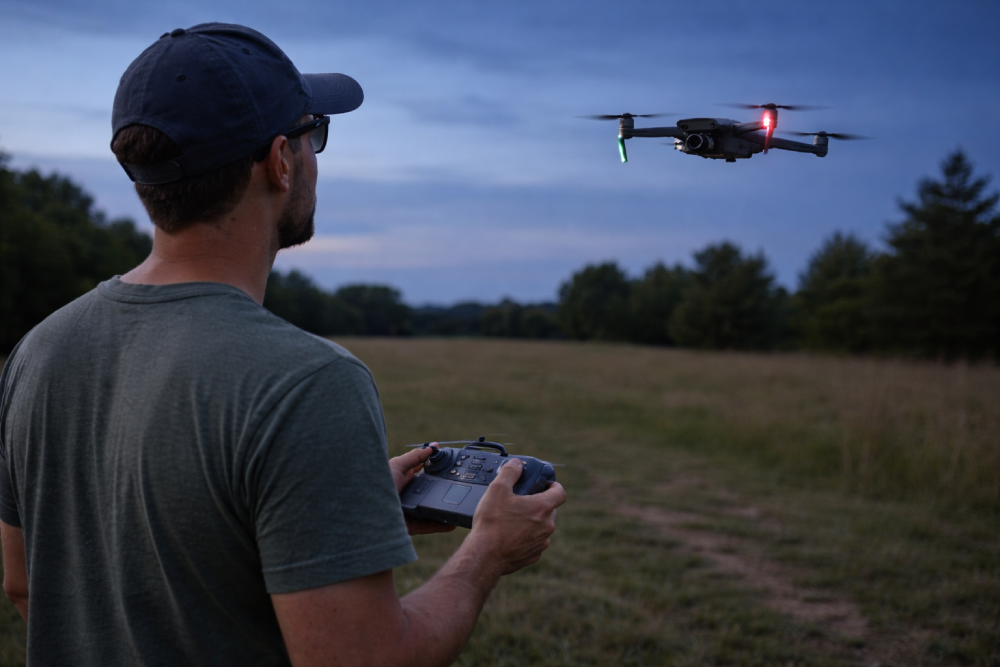
Your drone needs a blinking light that someone can see from 3 miles away. That is the main rule. Most consumer drones do not come with lighting that meets this standard out of the box, so pilots who fly at night typically add an aftermarket strobe. The light needs to be anti-collision, meaning it flashes. A steady light does not count.
Why Civil Twilight Trips People Up on the Exam
The exam loves to give you a scenario with a specific time and ask whether the pilot is flying at night or during the day. Something like "sunset was at 7:42pm and the pilot launched at 8:05pm, is this a night operation?" A lot of people say yes because it sounds late. But 8:05pm is only 23 minutes after sunset, which means civil twilight has not ended yet, which means it is technically still daytime under Part 107 rules.
8:13pm or later would be night. 8:05pm is not. The 30 minute window is the whole trick.
The Quick Rule to Remember
- Sunset plus 30 minutes is when night begins
- Sunrise minus 30 minutes is when night ends
- Night flight is allowed without a waiver but requires anti-collision lighting visible from 3 statute miles
Regulation questions like this are very learnable
FAA 107 Prep covers every rule with clear explanations so nothing sneaks up on you on test day.